TJMT · Basis · 2025–2026 · Enterprise UX
TJMT
Court services app & AI-assisted research
Summary
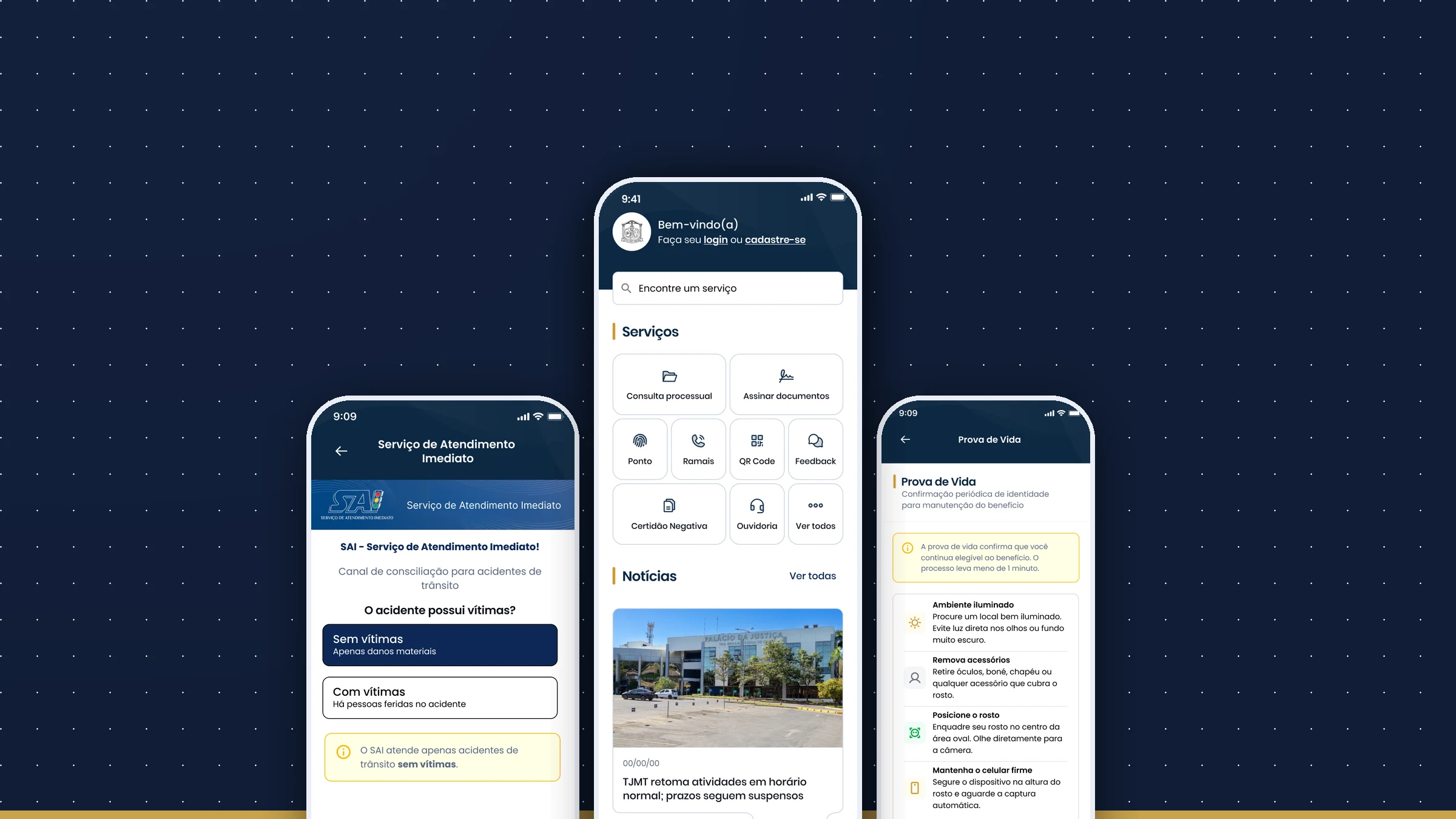
Product design for the Mato Grosso Court of Justice (TJMT), via Basis. I designed citizen and staff journeys for the court’s services app, from case lookup and negative certificates to proof of life and court orders, and used AI to speed up research analysis and interactive prototyping, always validated with real users.
Context
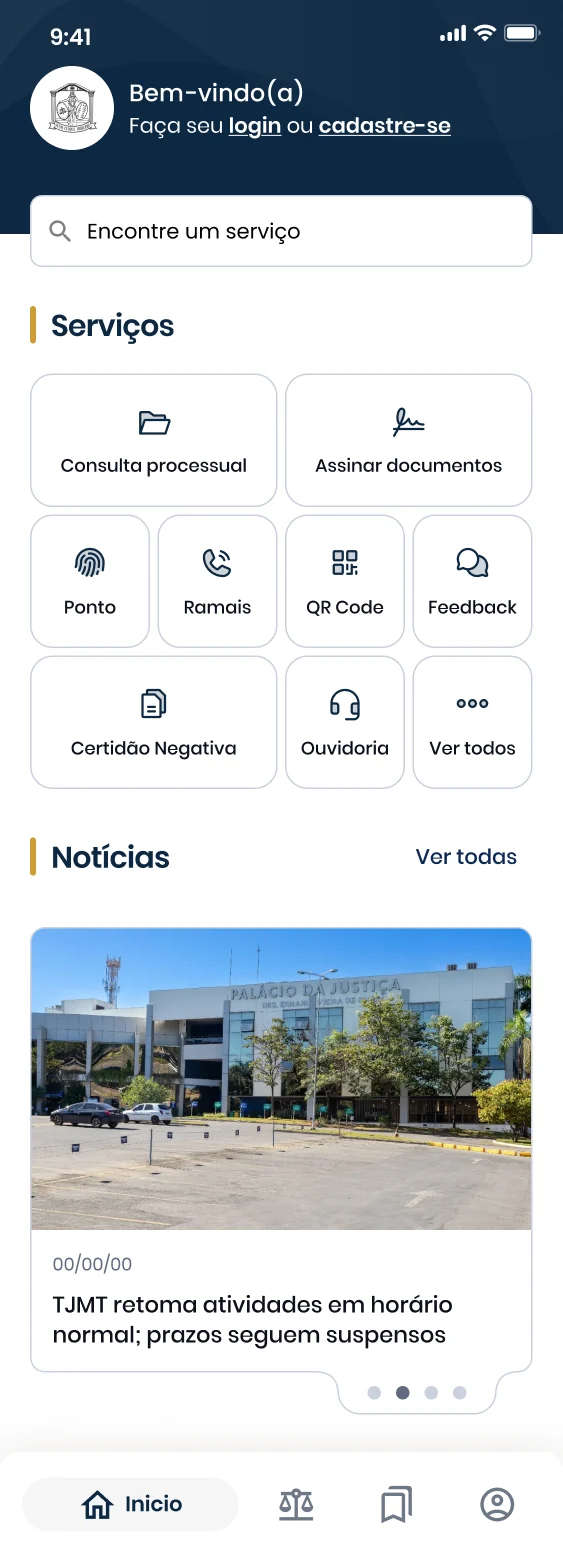
The TJMT app gathers the court’s public services in one place: case lookup, document signing, negative certificates, the ombudsman, internal extensions and news.
Each service had grown on its own, with different patterns and language. Citizens with very different levels of digital skill needed to complete legal tasks without help, on their phones.
My role
As contract Product Designer at Basis, I owned the end to end design of new service flows: discovery, flows, interface, interactive prototypes and usability tests.
I worked with the court’s teams and its AI Centre, turning legal requirements into plain, step by step journeys.
Research
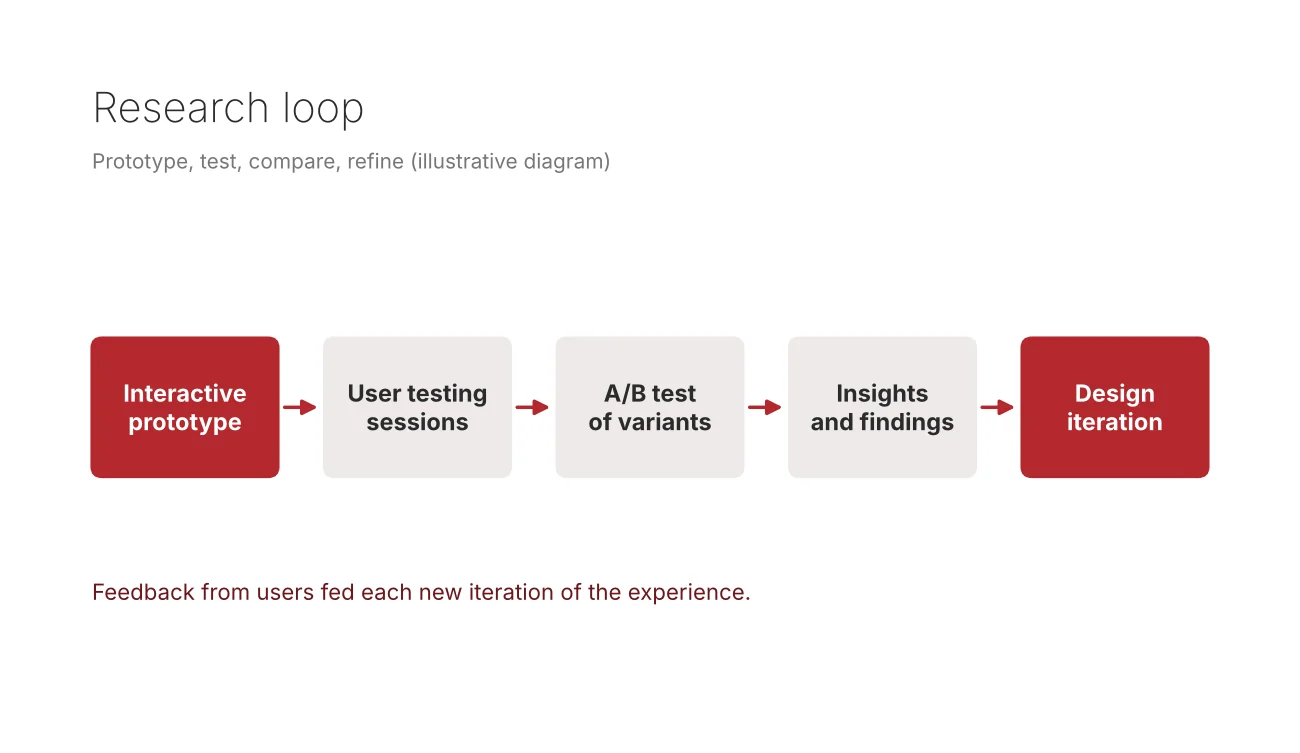
Every flow went through the same loop: an interactive prototype, user testing sessions, A/B tests of variants, findings, and a new design iteration.
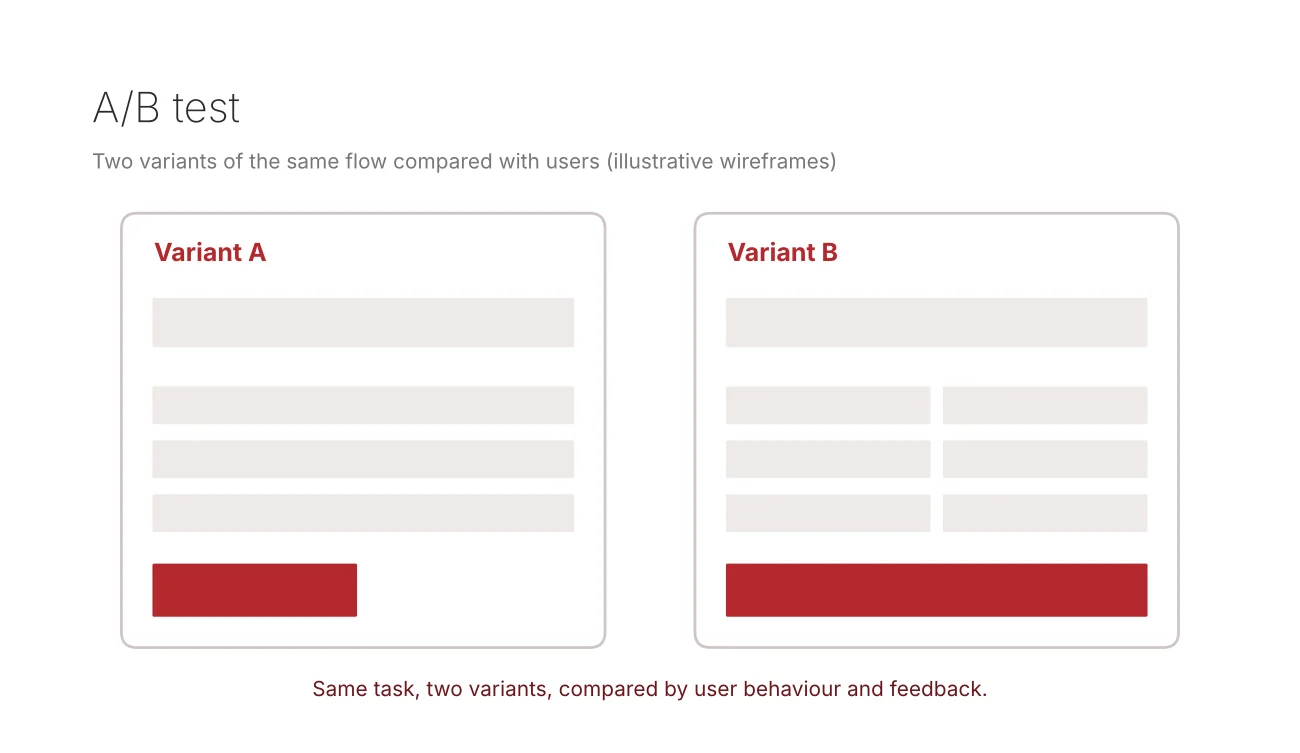
Comparing two versions of the same task showed which layout people understood faster, so decisions came from user behaviour instead of opinion.
Solution
A single home brings the most used services forward, with search on top. Each service then follows the same structure: a clear title, a short explanation of what will happen, one decision per screen and a single primary action.
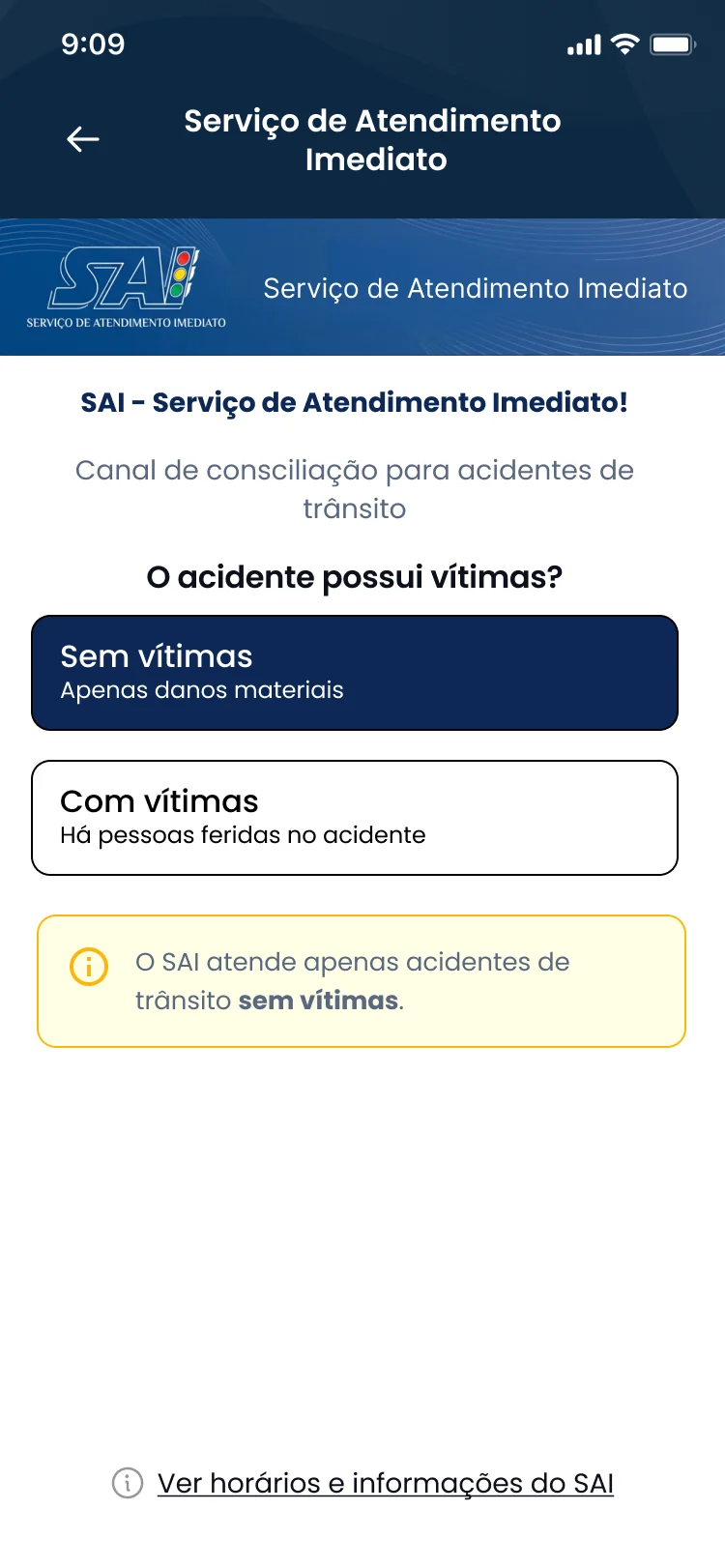
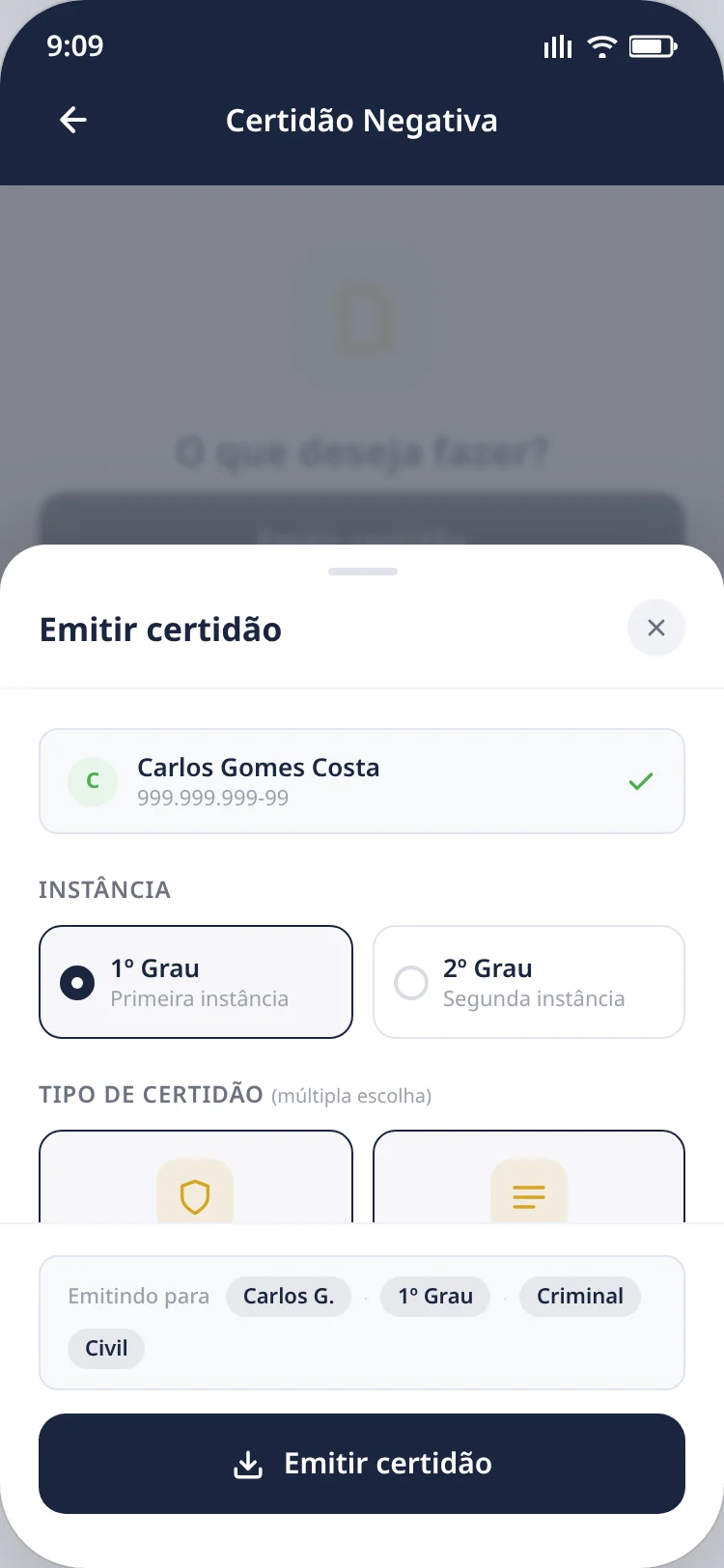
The Immediate Service (SAI) for traffic accidents starts with one question, whether there are victims, and explains up front that only accidents without victims are handled. The negative certificate uses a progressive bottom sheet that summarises every choice before issuing.
Proof of life
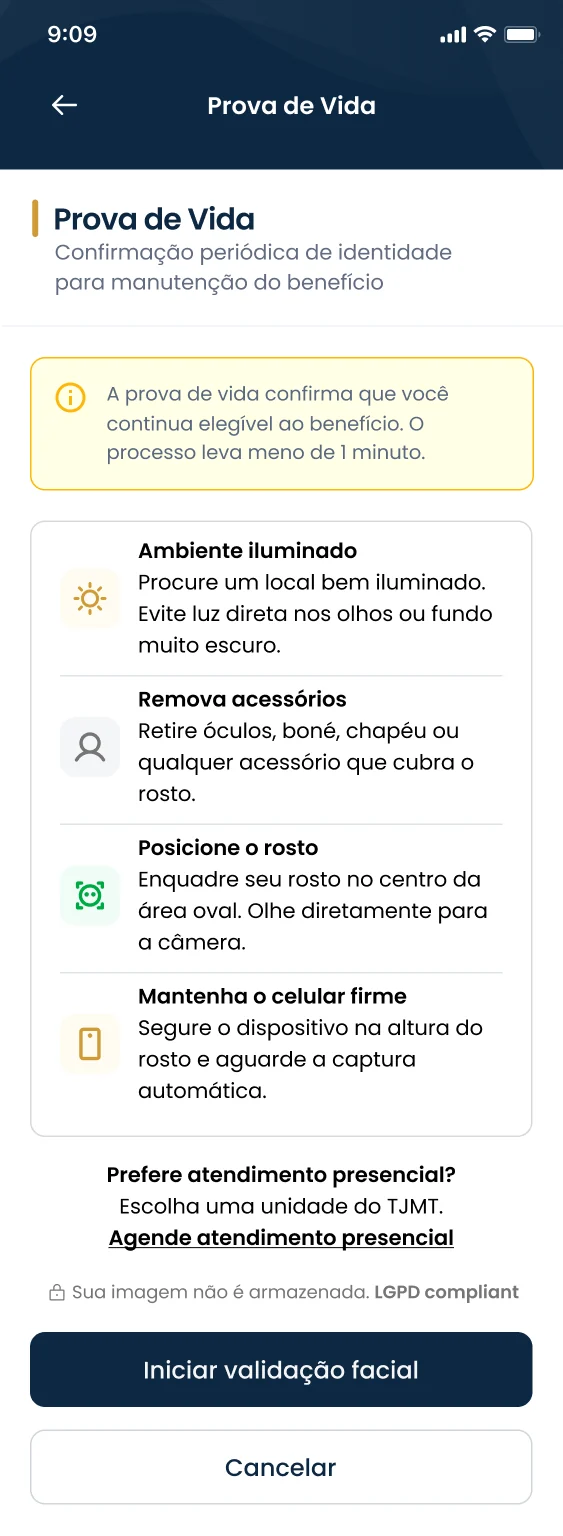
Beneficiaries confirm they are still eligible with a face check. Before the camera opens, four short tips cover light, accessories, face position and holding the phone steady, which reduces failed captures.
The screen also offers in person service at a TJMT unit and states that the image is not stored, in line with LGPD.
Court orders (PJe)
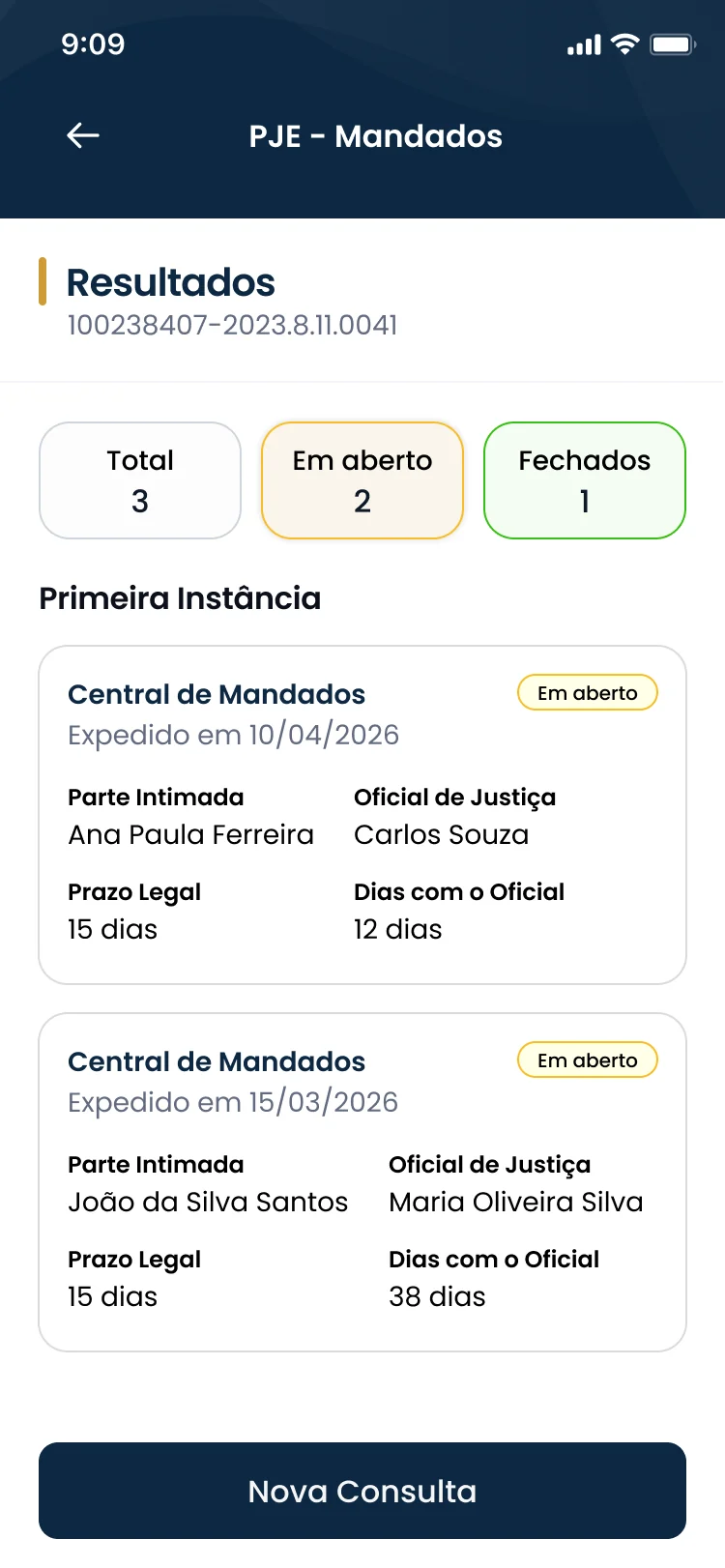
For court orders, people needed to know quickly what was still pending. Results open with three counters, total, open and closed, that also work as filters.
Each card shows the party served, the court officer, the legal deadline and the days with the officer, so delays stand out without opening the record.
AI work with the court’s AI Centre
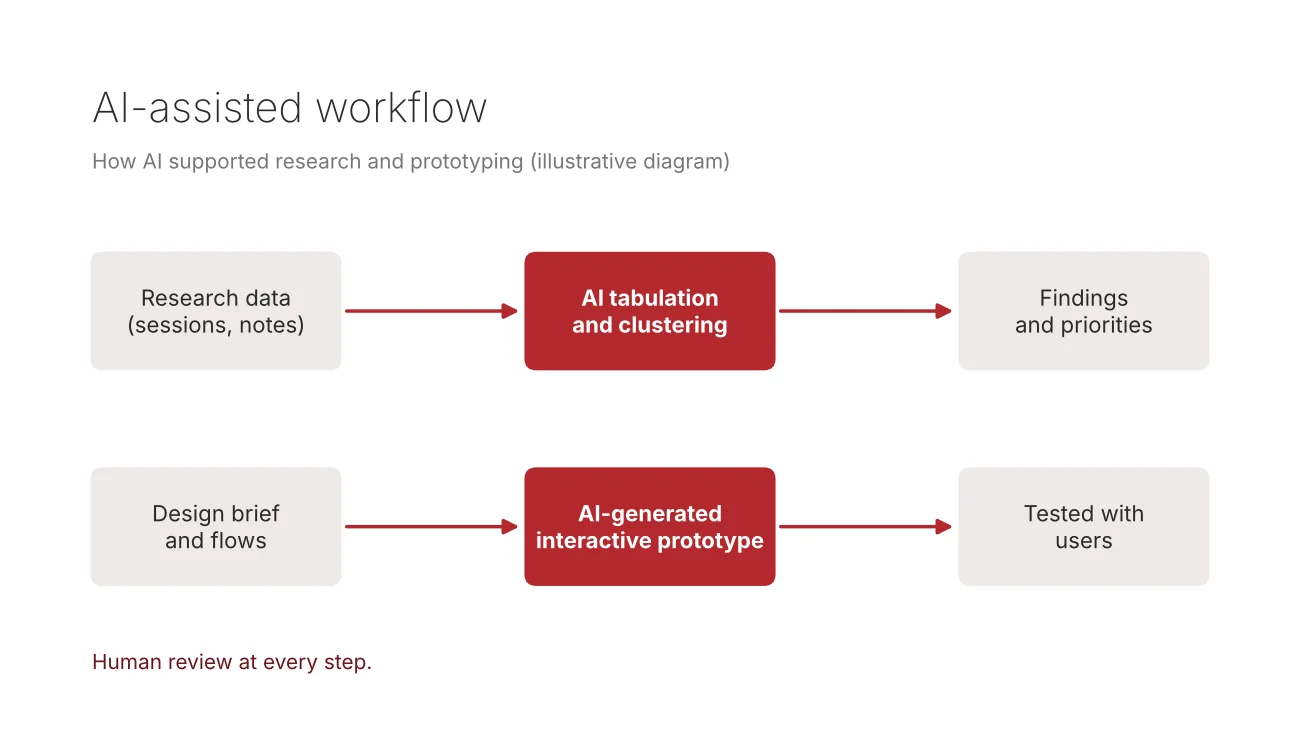
AI supported two parts of the process. Research data from sessions and notes was tabulated and clustered with AI, turning raw observations into findings and priorities faster.
Design briefs and flows became AI generated interactive prototypes, ready to test with users in less time. Every step had human review.
Results
Flows validated with users before development, decisions backed by A/B tests, and one visual language shared across the court’s services.
AI shortened the path from research to a testable prototype, so more ideas could be tested in each cycle.
Next case →
Mockit